
The Morning Mirror Nightmare: Why Is This Still Happening?
Let's be real. Waking up in your thirties and finding a massive, angry red bump on your chin feels like a bad joke. You pay your taxes, you keep your houseplants alive (mostly), so why are you still dealing with teenage skin drama? I used to spend half my paycheck on hyped-up serums, hoping for a miracle, until I figured out what was actually wrecking my skin barrier. Let's fix this together.
As someone who battled severe cystic acne well into my late twenties, I vividly remember sitting in my car before a massive client presentation, staring at the rearview mirror and wanting to cry. A huge, painful breakout had just claimed my jawline. I was spending half my paycheck on expensive serums, yet nothing worked permanently. After years of trial and error and consulting with dermatologists, I finally understood that adult skin requires a completely different approach than teenage skin. Here is what actually helped me clear my skin barrier.
You probably know the feeling. You wake up, look in the mirror, and your heart just sinks. Right there on your chin is a deep, throbbing red bump.
The frustration is unreal. You are a grown adult. You pay a mortgage, manage a career, and keep humans alive. Why on earth are you still battling causes of adult acne that were supposed to vanish after high school?
It feels incredibly unfair. You wash your face twice a day. You buy the expensive serums and the highly-rated moisturizers. You change your pillowcases.
Yet, nothing seems to work permanently. The physical pain of the blemishes is bad enough, but the mental exhaustion is much worse.
It slowly drains your confidence before a big meeting. It makes you want to hide in the back of group photos. You start avoiding eye contact when talking to friends, secretly wondering if they are staring at your breakouts.
If this sounds like your daily reality, take a deep breath. You are not failing, and your hygiene is not the problem.
The truth is, adult skin behaves very differently from teenage skin. When standard care does not work, it simply means something deeper is going on beneath the surface.
Today, we are going to look past the surface-level treatments. We will explore the hidden biological and environmental triggers that are secretly keeping your skin inflamed, and exactly how you can shut them down.

At a Glance: How to Reclaim Your Skin
- Check your hair products: Heavy conditioners often drip down and secretly clog your forehead pores.
- Ditch the damp towels: Switch to fresh, cheap microfiber cloths every single time you dry your face.
- Test your tap water: Hard water leaves an invisible, acne-causing soap film right on your cheeks.
- Stop scrubbing so hard: Washing more than twice a day strips your barrier and forces your skin to create even more oil.
Beyond the Surface: Breaking Down the Invisible Acne Triggers
When you deal with persistent adult breakouts, the first instinct is to scrub harder. We naturally assume that more cleansing, stronger acids, and thicker masks will finally do the trick.
However, science tells us a completely different story.
Your skin is a highly sensitive organ that acts as an alarm system for your internal health and your immediate environment. When it continuously breaks out despite good hygiene, an internal alarm is ringing. Let us uncover the real reasons behind these stubborn blemishes.
How Stress Literally Ruins Your Face
We all hear that stress is bad for us. But do you realize how a toxic day at the office or doomscrolling on LinkedIn at 2 AM physically changes your face?
When your brain feels overwhelmed by endless emails, bills, or family drama, it hits the panic switch. Your body starts pumping out cortisol like crazy. And this is exactly where stress-induced breakouts start taking over your life.
Here is where the problem starts for your complexion. According to dermatological studies, high cortisol levels directly instruct your sebaceous glands to go into overdrive.
Your skin starts pumping out excessive amounts of a thick, sticky oil called sebum. Think of it like a car engine running far too hot and leaking thick oil everywhere.
At the exact same time, stress slows down your cellular turnover. The dead skin cells on your face become sluggish and refuse to fall off naturally.
When you combine a massive flood of sticky oil with a buildup of dead skin cells, you create the perfect trap. The pore gets completely sealed shut, trapping bacteria inside. This results in those deep, painful, cystic bumps that take weeks to go away.
Pro Tip for Immediate Relief: You cannot eliminate stress entirely, but you can change how your body reacts to it. Practice the "4-7-8 Breathing Technique" before bed. Inhale for 4 seconds, hold for 7, and exhale for 8. This physically lowers your heart rate and signals your adrenal glands to shut off the cortisol pump.
The "Stress-Skin" Reality Check:
- What you think helps: Buying a $60 clay mask to aggressively dry out the oil on your chin.
- What actually works: Getting 8 hours of sleep so your cortisol levels drop naturally, stopping the oil production right at the source. (Save your $60 and just take a nap!)
The Sneaky Bathroom Habits Ruining Your Face
Sometimes the problem isn't your hormones; it’s sitting right there on your bathroom rack.
You might be washing your face with a $40 cleanser, but what do you do right after? You probably dry it with a regular bath towel. If that towel has been hanging in your damp bathroom for a few days, it's basically a breeding ground for bacteria. You are essentially wiping a dirty sponge straight onto your clean pores, completely destroying your chances of protecting your skin barrier.
Another silent killer? Your laundry detergent. Those heavy, floral-scented pods might make your sheets smell amazing, but those artificial fragrances bake into your pillowcase and irritate your skin for eight hours every single night.
When you sleep on your pillowcase, the heat from your body warms up those chemical residues. These harsh chemicals transfer directly onto your cheeks and jawline for eight hours a night.
This causes constant micro-irritation. Your skin barrier becomes compromised, making it incredibly easy for normal, harmless bacteria to suddenly cause a massive breakout.
To fix this, switch to a fragrance-free, hypoallergenic laundry detergent specifically designed for sensitive skin. Furthermore, buy a bulk pack of cheap, soft microfiber cloths. Use a fresh, clean cloth every single time you dry your face, and never let a used towel touch your skin again.
Sneaky Hair Care Ingredients Bleeding Onto Your Forehead
Have you ever noticed that your breakouts are heavily concentrated around your forehead, temples, or the back of your neck? If so, your skincare routine might be flawless, but your hair care routine is secretly sabotaging you.
Shampoos, heavy conditioners, leave-in serums, and styling pomades are packed with thick emollients and oils. These ingredients are fantastic for keeping your hair shiny and hydrated.
However, they are absolutely terrible for facial skin. Throughout the day, as your scalp naturally sweats, those hair products melt slightly.
They slowly travel down your forehead and onto the sides of your face. This is a phenomenon dermatologists call "pomade acne."
It happens frequently when you work out. The sweat carries the heavy hair oils straight down into your freshly opened pores.
How to stop this cycle: Always wash your face after you rinse out your hair conditioner in the shower, not before. This ensures you wash away any slippery residue left on your skin. When working out, wear an absorbent cotton headband right at the hairline to catch sweat before it drags hair products onto your forehead.
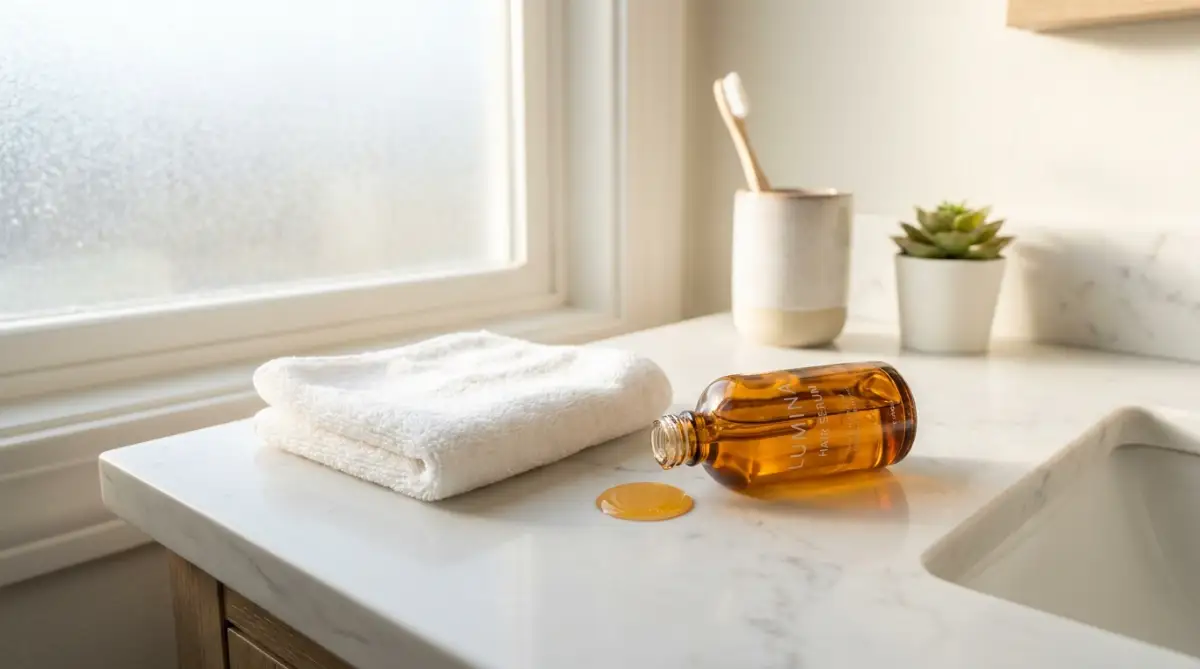
Myth vs Reality: The Face Washing Trap
When breakouts get out of control, our natural reaction is to wash our face more frequently. Let us clear up a massive misunderstanding about adult skin.
The Myth: Acne is caused by a dirty face, so washing three or four times a day will keep the pores clean and clear the breakouts faster.
The Reality: Over-washing is one of the fastest ways to guarantee your breakouts will get worse.
I used to make the terrible mistake of washing my face three times a day with strong, stinging soaps because I thought it would dry out the pimples. My biggest realization was that I was actually destroying my skin's natural protection, causing it to panic and create even more oil! Once I switched to washing just twice a day with a super gentle cleanser, my deep breakouts almost completely stopped.
Your skin has a natural, protective layer of oils and healthy bacteria called the acid mantle. This mantle is your frontline defense against pollution and acne-causing bacteria.
When you use foaming cleansers multiple times a day, you completely strip away this protective layer. Your skin panics because it feels dangerously dry and exposed.
To compensate for the extreme dryness, your skin immediately produces a massive surge of new oil. You get trapped in a frustrating cycle of tight, dry skin that is simultaneously breaking out with oily pimples.
Stick to washing your face just twice a day—once in the morning and once at night. Use a gentle, non-foaming hydrating cleanser that respects your natural skin barrier.
Is Your Tap Water the Real Villain?
Here’s a plot twist almost nobody talks about: the water coming out of your sink might actually be the reason your face is constantly inflamed.
When I moved to a new apartment in the city a few years ago, my skin went completely crazy. It turns out, city tap water is often packed with heavy minerals like calcium and magnesium. This is "hard water," and it is notorious for causing severe hard water skin damage.
Hard water makes it very difficult for your facial cleanser to rinse off completely. Instead of washing cleanly down the drain, the soap binds with the heavy minerals in the water.
Quick DIY Hard Water Test:
Grab a clear glass bottle, fill it halfway with your bathroom tap water, and add a few drops of pure liquid soap. Shake it up! If the water looks milky and has barely any bubbles, you have hard water. If you get tons of fluffy bubbles and clear water, your tap is totally safe!
This creates a microscopic, sticky film of soap scum that stays invisible on your face. This invisible film clogs your pores and blocks your expensive skincare serums from actually absorbing.
Additionally, hard water has a high pH level, which disrupts the natural, slightly acidic pH of your skin. When your skin's pH is thrown off balance, it becomes a breeding ground for acne bacteria.
If you suspect hard water is your issue, you can easily test this theory. For the next seven days, do not let tap water touch your face. Wash your face using only distilled bottled water. If your skin suddenly calms down and looks significantly less red, you have found your hidden trigger. You can easily fix this permanently by attaching a small, affordable water filter directly to your bathroom faucet.
The Gut-Skin Axis Mystery
We cannot talk about persistent skin issues without looking at what is happening inside your stomach. Your digestive system and your skin are in constant communication with each other.
Medical professionals refer to this connection as the Gut-Skin Axis. Think of your digestive system as the body's main waste management and nutrient delivery center.
When your gut is healthy and balanced, it smoothly filters out toxins and sends clear, calming signals to your skin. But when your gut microbiome is out of balance, chaos ensues.
Consuming a high amount of processed foods, hidden sugars, and dairy can cause bad bacteria to overgrow in your stomach. This triggers a massive inflammatory response throughout your entire body.
This internal inflammation looks for a way to escape, and it often shows up directly on your face.
The Inflammatory Path The Calming Path Highly processed sugary snacks Fresh berries and natural antioxidants Sweetened artificial fruit juices Green tea with a squeeze of fresh lemon Heavy dairy and processed cheese Probiotic-rich foods like plain yogurt or kefir Refined white bread and pasta Sweet potatoes and complex whole grains
Notice how small, everyday dietary choices can heavily impact your internal inflammation. A sudden spike in blood sugar directly increases insulin levels in your body.
Just like cortisol, a sudden spike in insulin commands your oil glands to produce massive amounts of sebum. By simply balancing your blood sugar throughout the day with protein and healthy fats, you naturally tell your oil glands to relax and slow down.
Advanced Strategies to Outsmart Your Breakouts
Fixing adult breakouts requires a totally different approach than the one you used in your teenage years. You cannot just dry out the pimples and expect clear skin the next morning.
Instead, you have to outsmart your biology. Your body wants to heal, but it needs the right environment To do so.
Let us look at some highly effective, science-backed methods that go beyond basic washing. These are the daily habits that dermatologists practice behind closed doors to keep their own complexions flawless.
Why You Need to Start "Skin Cycling" Tonight
If you haven't seen the TikTok trends about skin cycling by dermatologists like Dr. Whitney Bowe, prepare to rethink your whole night routine. We all saw those 10-step Korean skincare routines and assumed slamming retinol, Vitamin C, and acids on our face every night would fix everything faster.
Spoiler alert: It just gives you a microscopic chemical burn.
To build a proper hormonal acne skincare routine, you need to cycle your products. It’s a four-night rotation that finally gives your angry skin a chance to breathe and heal.
On night one, you use a chemical exfoliant to gently dissolve dead cells. On night two, you apply a targeted treatment like retinol to boost cell turnover.
Nights three and four are dedicated entirely to deep recovery. You only use a gentle cleanser and a thick, soothing moisturizer to repair the damage.
By giving your face two full days of rest, you completely eliminate the redness and irritation that usually triggers new pimples.
If you feel completely confused about how to apply your nighttime products without causing more breakouts, watch this quick video below before moving on. It will show you exactly how to set up a safe, easy rotation that actually gives your face time to heal!
Mastering Your Hidden Financial Stressors
Managing Everyday Adult Stressors
We already talked about how stress hormones like cortisol pump excess oil into your pores. But what is actually causing that chronic stress?
For most adults, the biggest silent triggers for jawline and cystic acne are workplace anxiety, lack of sleep, and daily life pressure. When your nervous system remains stuck in a "fight or flight" state, your body constantly produces stress hormones.
To combat this, try incorporating small mindfulness habits into your routine. Even a 10-minute walk outside, reducing your screen time before bed, or practicing deep breathing can naturally lower your daily anxiety levels. As your mental burden drops, your skin barrier can finally focus on repairing itself instead of fighting invisible hormonal threats.
Q&A: The Fabric of Your Sleep Environment
Question: Does my pillowcase really make a difference for my adult breakouts?
Answer: Absolutely. Standard cotton pillowcases act like giant sponges. They absorb your sweat, dead cells, and heavy nighttime skincare products. When you sleep on that same cotton surface the next night, you rub all that trapped bacteria right back into your cheeks.
Question: What is the easiest way to fix this?
Answer: Switch to a pure silk or high-quality satin pillowcase. These fabrics are completely non-absorbent. They allow your skin to glide smoothly over the surface without causing friction or trapping nasty bacteria. You will notice a dramatic reduction in morning redness within just one week of making this simple swap.
Balancing the Microbiome of Your Face
Did you know your face is covered in millions of tiny, living microorganisms? This is called your skin microbiome, and it is actually a wonderful thing.
Good bacteria naturally eat the bad bacteria that cause those deep, infected pimples. The problem happens when we use harsh antibacterial soaps that kill off all the good guys.
When the good bacteria are gone, the bad bacteria throw a massive party in your open pores. To keep your microbiome happy, you need to maintain a slightly acidic pH level on your skin surface.
You can easily do this by applying a gentle, balancing toner immediately after washing your face. For a deeper understanding of how this works, the American Academy of Dermatology explains how hormonal fluctuations trigger adult acne and why maintaining this delicate balance is so necessary.

The Trap of Desperation: Habits That Quietly Ruin Your Face
When you are desperately trying to fix a bad breakout before a social event, logic often goes out the window. The emotional toll of looking in the mirror and hating what you see pushes you to make terrible, damaging decisions.
I know exactly how this feels. You think a quick, aggressive fix will save the day. Unfortunately, these desperate actions always backfire. Let us talk about the most common mistakes that are secretly keeping you trapped in this endless cycle of inflammation.
The Late-Night Picking Trap
We have all been there. It’s 11:30 PM, you lean two inches away from the bathroom mirror under those harsh lights, spot a tiny whitehead, and lie to yourself: "I'll just pop this one really carefully."
Fast forward ten minutes, and you look like you were in a fight. The spot is bleeding, swollen, and looks ten times worse. When you squeeze, you are literally forcing half the bacteria deeper into your skin. If you want to know how to stop skin picking, do yourself a massive favor: buy a pack of Hero Cosmetics Mighty Patches. Slap a hydrocolloid sticker on it and go to bed.
This causes the follicle wall to rupture beneath the surface. According to medical experts, this internal rupture is exactly what causes permanent, pitted scarring on your cheeks.
A ruptured pore spreads the infection to neighboring pores. This is why you often see three new pimples pop up right next to the one you popped yesterday.
Instead of picking, apply a simple hydrocolloid patch over the spot before you go to bed. These magical little stickers gently pull the infection out overnight without damaging the surrounding tissue.
The "Kitchen Sink" Product Method
When one serum fails, it is incredibly tempting to run to the store and buy three new ones. You end up layering an acid wash, a heavy clay mask, a brightening serum, and an acne cream all at the same time.
You throw everything but the kitchen sink at your face. This is the absolute worst thing you can do to an already angry complexion.
Think of your skin barrier like a brick wall. The healthy cells are the bricks, and your natural oils are the mortar holding everything tightly together. When you apply too many strong chemicals at once, you completely melt away the mortar. Your wall crumbles, leaving your inner skin layers completely exposed to the outside world.
Every speck of dust, pollution, and minor bacteria now has a free pass to enter your pores. Less is always more when you are dealing with adult skin issues.
If you are currently experiencing a severe reaction, strip your routine back to absolute basics. Use nothing but water, a gentle cleanser, and a basic moisturizer for fourteen days to rebuild your broken wall.
Drying Out Your Skin to "Cure" the Oil
There is a very old, very stubborn myth that acne needs to be dried out with strong alcohols or harsh astringents. People love the tight, squeaky-clean feeling they get after using a strong toner.
They mistakenly believe that if there is no oil on the skin, a pimple cannot survive. This logic is completely backwards.
Your skin requires a specific level of hydration to function properly. When you aggressively strip away all the moisture, your internal sensors go into a complete panic mode.
Your body thinks you are wandering through a hot, dry desert. To protect you, it immediately produces a massive, emergency flood of thick sebum to coat your face.
Instead of attacking the oil, give your face deep hydration. Using a lightweight, water-based hyaluronic acid serum actually tells your oil glands to calm down and stop overproducing.
Relying Too Heavily on External Cures
Another massive pitfall is ignoring what happens inside your body while obsessing over what goes on the outside. You can use the most expensive creams in the world, but they cannot fix an internal imbalance.
If your diet consists entirely of highly processed sugars and fast food, your body will constantly generate internal inflammation. No topical serum can outwork a terrible diet.
Take a moment to look at your daily habits holistically. How much water are you actually drinking while sitting at your desk all day?
Are you getting enough deep, restorative sleep at night, or are you scrolling on your phone until 2 AM? True healing happens when your internal environment matches the care you are putting into your external routine.
Taking Your Face (And Sanity) Back
Healing adult breakouts isn't a perfect, straight line. You will still get a random pimple before a big date, and that is completely okay. But at least now you aren't guessing in the dark. You actually know what's triggering the inflammation.
As you build your own adult acne treatment plan, please don't try to change your entire life by tomorrow morning. Panic-buying ten new products or stressing out about your diet will only spike your cortisol again!
Pick just one or two simple things to change tonight. Swap out your heavy laundry detergent for a sensitive-skin formula.
Commit to stopping the aggressive mirror-picking sessions. Or simply practice five minutes of deep breathing before bed to shut down your cortisol production.
Small, consistent daily actions compound into massive results over time. Your body is incredibly resilient and desperately wants to heal itself.
You just have to get out of its way and provide a calm, supportive environment. Be patient with your progress, and remember that an angry breakout does not define your worth or your beauty.
Yor are taking the right steps today, and your future self will absolutely thank you for it.
Looking back, the day I stopped attacking my skin and started treating it with kindness was the day everything finally changed for me. You do not have to live with this frustration forever, so pick just one small habit to change tonight and watch how your skin rewards you. I know exactly how hard this journey is, but I promise you that calm, clear skin is completely possible for you!
Disclaimer: This article is for informational purposes only and does not constitute medical advice. Always consult a certified dermatologist before trying new skincare routines or treating adult acne.