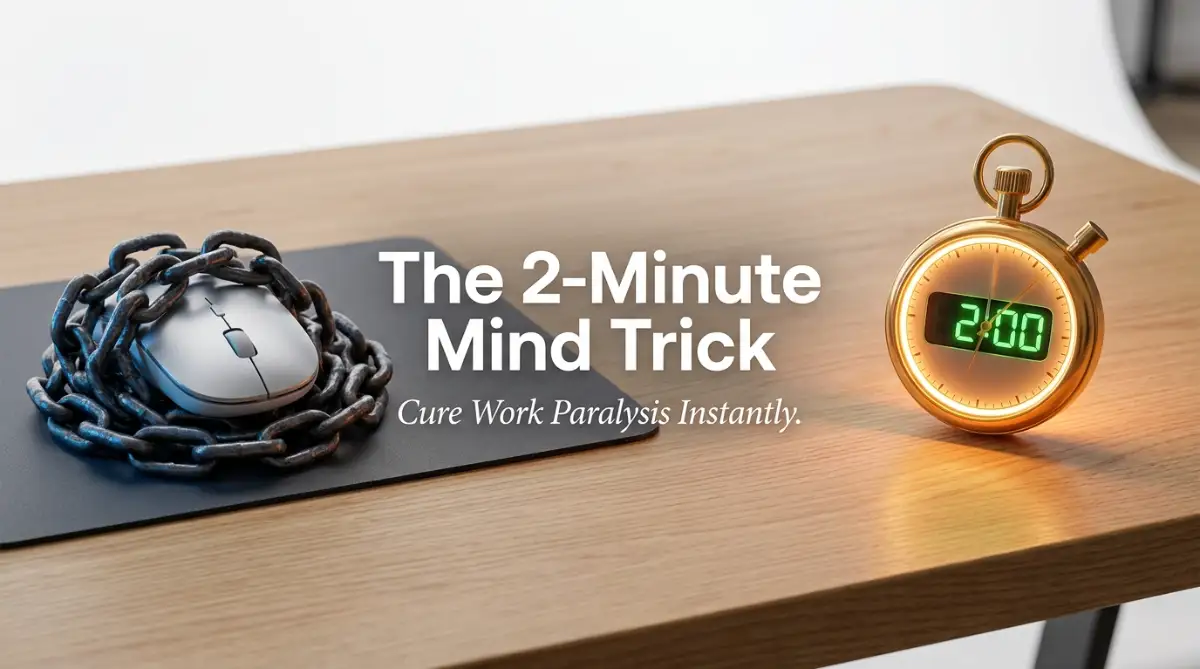
The Heavy Weight of Always Saying "I Will Do It Tomorrow"
I clearly remember sitting at my kitchen table at midnight, staring blankly at a glowing laptop screen. My chest felt tight, and my hands were literally shaking from the stress of a deadline I had ignored for three whole weeks. I just needed to write a simple project outline, but my brain completely shut down in absolute panic.
Instead of typing a single word, I watched random cooking videos while an overwhelming sense of guilt ruined my entire night. I deeply hated myself for being so lazy in that moment. But I physically could not force my fingers to move across the keyboard.
It felt exactly like I was trapped inside a thick glass box. I was screaming at myself to just start working, but my body stubbornly refused to listen. This was my daily reality for a very long time, and it almost cost me my entire career.
If you are reading this, I know you probably feel that exact same heavy weight on your shoulders right now. You wake up with the best intentions, promising yourself that today will finally be a highly productive day. But the moment you sit down to tackle your biggest task, a sudden wave of extreme dread washes over you.
You decide to quickly check your email first, just to get warmed up. Then you decide to organize your desk, because you simply cannot work in a messy room. Before you know it, the sun is going down, your important task is still untouched, and you feel entirely defeated.
This endless cycle of delaying work does not just hurt your career goals. It slowly destroys your personal mental peace and eats away at your self-confidence. You go to bed feeling like a massive failure, terrified of waking up to face the exact same impossible mountain of work again.
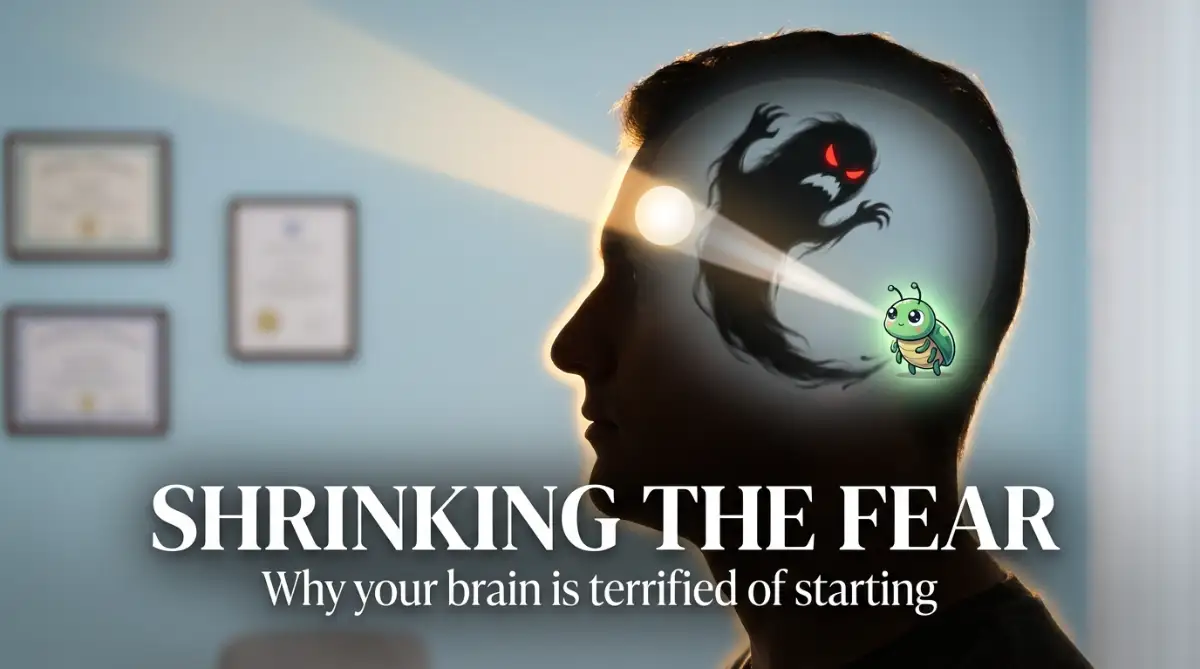
Understanding Why Your Brain Freezes in Fear
To completely fix this frustrating habit, we first have to understand what is actually happening inside your head. Society loves to tell us that procrastinators are just lazy people who lack self-discipline. This is a massive lie that completely ignores human psychology.
Procrastination has absolutely nothing to do with poor time management. It is actually a very complex emotional regulation problem. When you look at a massive, difficult project, your brain immediately senses a threat to your comfort and peace.
The oldest part of your brain, called the amygdala, treats this difficult project exactly like a dangerous wild animal. It triggers a sudden "fight or flight" response in your nervous system. Since you cannot physically fight a spreadsheet, your brain chooses flight.
It forces you to run away from the negative emotions associated with the hard work. You open social media because it provides a safe, instant dose of happy chemicals. Your brain is not trying to ruin your life; it is actually trying to protect you from feeling stressed and incompetent.
The Myth of Waiting for Motivation
One of the biggest lies we tell ourselves is that we just need to feel "inspired" before we can start. We sit around waiting for a magical wave of motivation to suddenly strike us from the sky. We think that successful people wake up every single day feeling incredibly excited to do hard things.
This is completely backward thinking. Action does not come from motivation; motivation comes from action.
Think about going to the gym on a cold, rainy morning. Nobody naturally feels motivated to leave a warm bed to go lift heavy weights. But once you actually force yourself to do the first ten minutes of a workout, your blood starts flowing.
Suddenly, you feel great and you actually want to finish the entire workout session. Your brain needs to see a tiny bit of physical proof that you are moving forward. Once it sees that proof, it will gladly supply all the motivation you need to keep going.
The Two-Minute Psychological Trick Revealed
Now that we know your brain is simply terrified of massive, overwhelming tasks, we can easily trick it. We do this by shrinking the scary monster down to the size of a harmless little bug. This is where the brilliant two-minute rule comes into play.
The core concept is ridiculously simple but scientifically profound. When you start a new habit or try to tackle a huge project, it must take less than two minutes to do.
You are not allowed to focus on the final result at all. You are only allowed to focus on the absolute smallest physical action required to begin. By making the starting step incredibly easy, you completely bypass the fear center of your brain.
Your brain looks at a two-minute task and says, "Oh, that is nothing, I can easily do that without getting stressed." You completely remove the emotional resistance that normally keeps you frozen in place.
Real-Life Scenarios: Shrinking the Mountain
Let us look at how this psychological trick works in everyday situations. Imagine you have to write a massive five-thousand-word report for your boss. If you put "Write report" on your to-do list, your brain will absolutely panic and make you scroll through your phone instead.
Using the two-minute trick, you change the goal entirely. Your new goal is simply to "Open a blank document and write one single sentence." That is it.
You tell yourself that after writing one sentence, you are totally allowed to stop and close the laptop. Writing one sentence takes less than two minutes, so your brain feels zero anxiety about it.
Here is another practical example for your home life. Let us say your kitchen is a massive disaster area with dishes piled up to the ceiling. The thought of cleaning the entire kitchen is exhausting, so you keep putting it off.
Your two-minute goal is to simply "Wash one single coffee cup." Anyone can wash one cup. It requires almost zero mental effort to grab a sponge and clean a single mug.
The Physics of Productivity
To understand why this simple trick is so highly effective, we can look at the basic laws of physics. Sir Isaac Newton famously stated that an object at rest tends to stay at rest. But an object in motion tends to stay in motion.
This law applies perfectly to human productivity and chronic laziness. The absolute hardest part of any task is simply overcoming the initial friction of starting.
Think about pushing a broken-down car on a flat road. Pushing the heavy car from a complete stop requires a massive amount of physical strength and energy. You have to push with all your might just to get the wheels to budge an inch.
But once the car is slowly rolling forward, it takes very little effort to keep it moving. Your brain works in the exact same mechanical way. The two-minute trick acts as that initial heavy push to get your mental wheels rolling.
Once you write that first sentence or wash that first cup, you have successfully broken the painful state of resting. You are now a body in motion.
Are you struggling to understand why starting is so painfully hard? Watch this incredible breakdown of how reducing friction instantly forces your brain to take massive action.
Embracing the Power of "Garbage" Work
A major reason we avoid starting our work is because we are secretly perfectionists. We desperately want the first draft of our project to be absolutely flawless. We are deeply terrified of producing something bad, so we choose to produce nothing at all.
The two-minute trick forces you to completely lower your personal standards. When your only goal is to work for 120 seconds, you naturally give yourself permission to do a terrible job. You have to embrace the freedom of doing garbage work.
I used to really struggle with this exact problem when writing long articles. I would try to force myself to write for an hour, but I wanted every single paragraph to sound like poetry. My brain would freeze, and I would end up staring at a blank screen for three hours.
Then I started using the two-minute trick, promising myself I only had to write for two minutes, and it could be the absolute worst writing in the world. Surprisingly, by giving myself permission to write total garbage, the words finally started flowing out of me naturally.
You can always edit and fix a bad first draft tomorrow morning. But you cannot edit a blank page. The simple act of putting messy, imperfect ideas into reality completely destroys the heavy chains of perfectionism.
Rewiring the Brain's Reward System
Every time you successfully complete a task, your brain releases a tiny burst of a chemical called dopamine. This is the exact same happy chemical you get when someone likes your photo on social media. Dopamine makes you feel proud, energized, and deeply satisfied.
When you procrastinate, you are actively starving your brain of this natural reward system. You only get the reward when the massive project is 100% finished, which might take several weeks. No wonder you feel miserable along the way.
The two-minute trick completely hacks this chemical system in your favor. By breaking a huge project down into tiny two-minute micro-actions, you create a constant stream of easy wins.
When you successfully open the document and write that one sentence, your brain celebrates. It releases a small hit of dopamine, which instantly makes you feel successful and confident. That tiny chemical hit gives you the exact energy you need to write the second sentence.
Overcoming the "False Start" Trap
Many people try this psychological trick and fail because they secretly lie to themselves. They tell their brain, "I am only going to run on the treadmill for two minutes." But deep down, they secretly plan to force themselves to run for a full hour.
Your brain is incredibly smart and it can easily spot a lie. If it knows you are secretly planning a painful one-hour workout, the panic and anxiety will immediately return. You will find yourself sitting on the couch again.
You must be completely honest with your own mind to make this work. You truly have to give yourself the freedom to quit after two minutes.
If you put on your running shoes, step on the treadmill for two minutes, and still feel terrible, you must stop. Take the shoes off and walk away without any guilt. You successfully completed the goal you set, which was simply to show up.
By building this high level of deep trust with yourself, you slowly repair your damaged self-discipline. You teach your nervous system that starting a task is safe and painless. Once that trust is firmly established, your natural desire to keep working will automatically take over.
Mastering the Psychology of Momentum for the Long Haul
Now that you understand the basic science behind the two-minute mental shift, we need to talk about long-term sustainability. Getting started once is relatively easy, but maintaining this momentum for months requires a clever strategy. You have to actively redesign your daily environment to support this new psychological habit.
The goal is to make starting so incredibly obvious and simple that your brain cannot possibly say no. Let us look at some highly effective ways to build a permanent system of small wins.
The Magic of Environmental Triggers
Your brain relies heavily on visual cues to decide what to do next. If your desk is covered in random papers and old coffee cups, your mind instantly feels overwhelmed before you even sit down. You have to clear the physical friction away before you can clear the mental friction.
According to behavioral research published by Stanford University's Persuasive Tech Lab, human beings are deeply influenced by the tiny physical barriers in their environment. If something requires even slightly more effort to reach, we will naturally avoid it.
To use this to your advantage, you must set up your two-minute task the night before. If your goal is to write a blog post in the morning, open the blank document before you go to sleep. Leave your laptop open on the desk with a clear glass of water next to it.
When you wake up, the very first step is already done for you. The visual cue of the open laptop bypasses your morning laziness entirely. You just sit down and type that single sentence.
Linking Tiny Actions to Existing Routines
Building a completely new habit from scratch takes a massive amount of mental energy. Instead of forcing a new routine, you can easily attach your two-minute task to something you already do every single day. This concept is commonly known as habit stacking.
For example, you already brush your teeth every morning without ever thinking about it. You can tell yourself that immediately after placing your toothbrush back in the holder, you will spend two minutes organizing your daily schedule. You are essentially using the old habit as an automatic trigger for the new one.
This works perfectly for personal life administration as well. When you are trying to handle stressful adult responsibilities, like researching how to buy the best travel insurance for pre-existing conditions, the sheer volume of information can cause instant paralysis.
Instead of planning a three-hour research session, just stack it with your morning coffee. While the coffee machine is brewing, simply open one single insurance website and read the headline. That tiny action breaks the ice and gets the momentum flowing.
Forgiving Your Past Laziness
This might sound a bit strange, but self-forgiveness is a highly effective productivity tool. Most chronic procrastinators carry around a massive amount of internal shame. They constantly beat themselves up for wasting so much time yesterday, which actually drains the energy they need for today.
A fascinating psychological study featured in the Association for Psychological Science found that students who forgave themselves for procrastinating before an exam were actually much less likely to delay studying for the next one.
Guilt is an incredibly heavy emotion. When you feel terrible about yourself, your brain naturally seeks comfort in easy distractions like social media. You have to look in the mirror and accept that yesterday is completely gone, and you cannot change it.
Give yourself permission to start completely fresh right now. A calm, forgiven mind is always going to work faster than a stressed, guilty mind.
Breaking Down Complex Information Anxieties
Sometimes we procrastinate because the topic itself is incredibly dense or intimidating. We are afraid of feeling stupid, so we avoid the subject entirely. The two-minute rule is your best defense against information anxiety.
Let us say you are trying to navigate complex business regulations, much like understanding the hidden legal traps that can destroy your new startup overnight. Reading legal documents feels like trying to read an alien language.
Do not try to read the whole guide. Tell yourself you will only read the very first paragraph and highlight one single word you do not understand. By the time you look up that one word, your curiosity will naturally push you to read the next paragraph.
You can apply this same trick to personal finance goals. If you want to learn about unlocking your dream home low deposit condo mortgages explained, just read one subheading per day. Within a week, you will have consumed a massive amount of knowledge without ever feeling overwhelmed.

The Hidden Mental Traps That Sabotage Your Progress
Even with the best intentions, your brain will occasionally try to pull you back into your old, comfortable habits. It is highly important to recognize these silent traps before they completely derail your newly found momentum. If you fall for these mental tricks, you will end up right back in the cycle of guilt and paralysis.
Here are the most dangerous pitfalls people face when trying to implement the micro-action strategy in their daily lives.
The Secret Internal Lie
This is the absolute most common way people ruin the two-minute trick. You tell your brain that you are only going to fold laundry for two minutes. But deep down in your subconscious, you secretly plan to force yourself to clean the entire house.
Your brain is incredibly intelligent and it immediately senses the lie. The American Psychological Association regularly notes that cognitive dissonance, holding two conflicting beliefs at once, creates massive internal stress. Your brain knows you are lying, so the original fear and anxiety instantly return.
You suddenly feel completely exhausted before you even pick up a single shirt. You must be fiercely honest with yourself. If you say two minutes, you have to genuinely give yourself permission to walk away when the timer rings.
If you do not build total trust with your own mind, this psychological hack will completely stop working. You have to prove to yourself that it is actually safe to start.
The Perfectionist Preparation Trap
Many procrastinators are actually just disguised perfectionists. They use "getting ready to work" as a highly sophisticated form of delaying the actual work. They will spend three hours color-coding their digital calendar and organizing their pens, but they never actually start the main project.
They convince themselves that the physical environment must be absolutely flawless before they can begin. If the room is too cold, or the chair is slightly uncomfortable, they use it as a valid excuse to quit.
This is simply fear wearing a very fancy mask. You are afraid of doing a bad job, so you focus on perfectly organizing things that do not actually matter. Real progress is almost always messy and uncomfortable.
You have to force yourself to start in less-than-perfect conditions. Open the laptop while the room is messy. Write a terrible first draft while wearing your pajamas. Getting it done poorly is always better than perfectly planning to do absolutely nothing.
Misunderstanding Physical Exhaustion
Sometimes your refusal to work is not a psychological trick at all. Sometimes you are simply pushing a deeply exhausted physical body past its natural limits. You cannot outsmart severe sleep deprivation or poor nutrition with a clever time management hack.
If you are constantly tired, your brain will naturally refuse to engage in deep, focused thinking. You might think you are being lazy, but your body is actually just trying to survive the day. Prioritizing your physical health is the absolute foundation of any productivity system.
For example, many people look into safe weight loss supplements for women over 40 a complete guide to regain their daily energy. Taking care of your physical vessel ensures your brain has the actual fuel required to tackle hard tasks.
If you have been working fourteen-hour days for a month, no psychological trick will help you. You simply need to close your laptop, drink a glass of water, and sleep for ten straight hours.
The "All or Nothing" Mindset
This toxic mindset destroys more dreams than almost anything else. You convince yourself that if you do not have three completely uninterrupted hours to work, it is not even worth starting. You wait for the perfect open weekend that magically never seems to arrive.
Life is inherently chaotic and highly unpredictable. You will almost never have three perfectly quiet hours to dedicate to a personal project. If you refuse to use the small pockets of time available to you, you will remain stuck forever.
Fifteen minutes of focused work on a Tuesday morning is infinitely better than zero minutes of work. Small, consistent actions compound over time like financial interest in a bank account. A massive mountain is moved simply by carrying away one small stone every single day.
Your Action Plan to Defeat Work Paralysis Today
We have covered a lot of deep psychological ground, and you now have a highly effective toolkit to fight back against your own brain. You understand that procrastination is just an emotional defense mechanism against fear and anxiety. You know that motivation only arrives after you force yourself to take the very first step.
Most importantly, you have learned how to shrink massive, terrifying goals into incredibly tiny, harmless actions. By asking your brain for just 120 seconds of effort, you completely bypass the internal panic alarm.
You also know how to avoid the dangerous traps of perfectionism and secret internal lies. You are now fully equipped to redesign your environment, forgive your past mistakes, and build a sustainable system of continuous momentum. You simply need to start practicing these concepts today.
Look at the absolute biggest, scariest task on your to-do list right now. Ask yourself what the smallest possible physical action is to begin that task. Do not think about the finish line, just focus entirely on that one tiny starting movement.
I spent years crying at my kitchen table because I felt completely broken and naturally lazy compared to everyone else. My entire life completely changed the exact day I stopped judging myself, lowered my expectations, and just focused on the first two minutes of effort. You are absolutely capable of doing hard things; you just have to give yourself permission to start incredibly small.
Common Questions About Curing Work Procrastination
Why do I constantly delay doing the things I actually enjoy?
Even fun projects require a transition of mental energy. Shifting from passively watching television to actively painting or writing requires a burst of effort. Your brain naturally prefers the passive activity, so it creates resistance even for your favorite hobbies.
Does this two-minute method work for studying and reading?
Yes, it works beautifully for academics. Instead of planning to read an entire heavy textbook chapter, commit to just opening the book and reading the table of contents. Usually, the simple act of opening the physical book breaks your mental resistance, and you end up reading several pages naturally.
How do I handle massive tasks that cannot be easily broken down?
Every single task in the world can be broken down if you look closely enough. If you have to clean a massive, messy garage, do not focus on the room. Focus on picking up exactly one specific cardboard box and moving it outside; that is your only starting goal.
Is chronic procrastination a clear sign of ADHD?
While severe task paralysis can certainly be a symptom of ADHD, procrastination itself is a universal human experience. If your inability to start tasks is destroying your job or personal relationships, it is always a good idea to speak with a licensed medical professional for a proper evaluation.
What should I do if I stop after two minutes and still feel unmotivated?
You should absolutely walk away and try again later. The entire system relies heavily on you trusting yourself to stop when things feel too overwhelming. By stopping without guilt, you teach your brain that starting is safe, which makes it much easier to try again tomorrow.
Disclaimer: The information provided in this article is for educational and informational purposes only. It is not intended to act as professional psychological advice, therapy, or medical diagnosis. If chronic anxiety or executive dysfunction is severely impacting your daily life, please consult a qualified mental health professional.